5/10/09

MyGlobalTalk Submitted to Apple for Inclusion to its iPhone App Store

MyGlobalTalk_logo.jpgi2Telecom's MyGlobalTalk has been submitted to Apple for inclusion on its iPhone App Store. MyGlobalTalk is a free downloadable application that will allow iPhone users to place inexpensive phone calls to destinations anywhere in the world for as little as two to three cents per minute via their carriers' cellular voice networks. This contrasts sharply with the current methods in which users place regular calls via their mobile phone service providers at prices that can easily reach or exceed one dollar per minute when calling locations outside of the United States.

MyGlobalTalk, i2Telecom's internally developed patent-pending technology, is a new and advanced mobile VoIP application that targets the wireless handset market. MyGlobalTalk places Internet telephony in the hands of every cellular phone user, independent of wireless carrier technology, handset manufacturer, or the type of wireless carrier voice/data plan involved. The objective is to enable mobile users to access low-cost Internet telephony communications in a completely "untethered" manner via their MyGlobalTalk enabled cellular phones. Once the MyGlobalTalk application is simply downloaded onto a cellular handset, users are able to call any telephone in the world directly from their cellular phones, using VoIP technology, at a fraction of normal long-distance rates. In addition, MyGlobalTalk is fully functional without requiring local access to the Internet or proximity to an Internet "hotspot". Users also need not wait for the availability of dual-mode WiFi phones, because MyGlobalTalk provides the benefits of a dual-mode phone at a fraction of the cost, using the customer's existing mobile handset.

i2Telecom's Chairman and Chief Executive Officer Paul Arena commented, "Our latest version of MyGlobalTalk has demonstrated excellent reception quality in beta trials and is now ready for prime time with iPhone customers. We are offering 20 minutes of free calling with the MyGlobalTalk application, which should be available through the App Store in coming weeks".

"We previewed the MyGlobalTalk iPhone application at the Consumer Electronics Show in Las Vegas last week," continued Arena. "The response from CES attendees was very enthusiastic, with particular interest in the fact that the application offers carrier-grade quality at VoIP rates."


View article...

Ingate Earns ICSA Labs' Optional VoIP Module Firewall Certification

ingate_logo.gifIngate extends its firewall certification from ICSA Labs, an independent division of Verizon Business, to now include its VoIP module. This add-on certification assures users that the product meets ICSA Labs' strict requirements for successfully supporting VoIP traffic, while the firewall blocks VoIP security threats and properly mitigate them.

Specifically, ICSA Labs tested the Ingate Firewall 1500 VoIP module in two key areas. ICSA Labs vetted the product to verify that the introduction of the firewall into the VoIP stream did not disrupt or degrade the VoIP connection. ICSA Labs also tested the product to make sure that VoIP-specific vulnerabilities could not pass through the firewall.

ICSA Labs helps companies continually enhance their products by offering customers earning firewall certifications the opportunity to run specific product features, such as high availability and IPv6, through an optional testing program. Ingate Firewall 1500 is the first product to be granted ISCA Labs' certification for the VoIP module.


View article...

TMC's INTERNET TELEPHONY Magazine Announces 11th Annual Product of the Year Award Winners

TMCnet_logo.gifTechnology Marketing Corporation announced the winners of 2008 Product of the Year Awards, as selected by INTERNET TELEPHONY magazine. Recipients of the 11th Annual Product of the Year Awards represent the most innovative new products as selected by INTERNET TELEPHONY editors. Launched in 1998, INTERNET TELEPHONY is the premier publication covering the IP communications industry.

Recognizing the most innovative products, INTERNET TELEPHONY bestows this prestigious award to the most deserving companies. The editors of INTERNET TELEPHONY selected the companies which in their view demonstrate the vision, leadership and attention to detail that are the hallmarks of the prestigious Product of the Year Award.

"With hundreds of applications again this year, the judging process was difficult but the selected winners have demonstrated a commitment to quality and the continued development of the IP communications industry. These winners deserve this honor, and I look forward to seeing more innovative solutions from them as they continue to contribute to the future of VoIP and IP communications," stated TMC Editorial Director, Greg Galitzine.

"We are proud to recognize the greatest achievements in the advancement of VoIP and IP communication technologies in 2008," said Rich Tehrani, TMC president and editor-in-chief of INTERNET TELEPHONY magazine. "These companies have proven they are dedicated to quality and excellence while addressing real needs in the marketplace."

A full list of the 11th Annual Product of the Year Award winners and will be published in the February 2009 issue of INTERNET TELEPHONY magazine.


View article...

Buzz Technologies Releases Corporate VoIP Services Globally

12buzzlogo.jpgBuzz Inc's, BuzzTel is releasing a corporate VoIP service. The service carries an annual fee of $500 and provides 2 Virtual Phones numners anywhere in the world, Unlimited calling to USA, Canada,(Landlines and Mobiles) China and Europe (landlines). Buzz offers Crystal Clear VoIP calling and can be used from your existing phone network, mobiles, smartphones and iPhones.

BuzzTel's "Virtual International Numbers": by combining the low cost call rates with the advantage of Direct Inward Dial numbers to provide a low cost alternative to high direct dial international rates from 40 countries. A DID is a local access number that is used by BuzzTel to forward a call over the internet, using VoIP technology, to a specified number. By using DID numbers, you can bypasses high international long distance rates when making international calls, you can stay connected with clients, employees and suppliers for fraction of the cost. You can also track all phones and callers in real time

BuzzTel is the ideal solution for Enterprises seeking to have a local presence internationally without having to have a physical location in those counties. For example, a manufacturing firm in China desires a local presence in the United States without having to open up an office in New York. With BuzzTel, they can have a New York phone number that rings directly into the corporate office in China.


View article...

ooVoo 2.0 Released

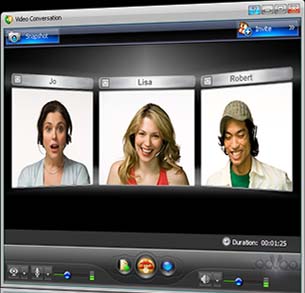
oovoo.jpgooVoo releases its newest version of high quality and face-to-face video chat service. ooVoo 2.0 continues to raise the standards for online video communication by introducing added free and premium priced features including: video chat rooms with no downloads necessary to use, improved friend search capabilities, and enhanced functionality to connect globally with family, friends and colleagues. ooVoo's popular video calls -- more than 1 million+ video calls are conducted monthly on its platform -- are as easy as a phone call, compatible with PC and MAC and work with a range of webcams.

Allowing people to create "real life" connections within their daily online experience, ooVoo makes it easier to connect on a human level and avoids the impersonal nature of electronic communications. An additional benefit is money and cost savings, people who want to connect with friends, family or colleagues without the expense of travel can now use high-quality video chat to see each other.

New ooVoo 2.0 Windows features include:

  • Video Call Anyone -- ooVoo users can use the "Web Video Call" to have an ooVoo video call with their friends who haven't downloaded ooVoo yet. These friends can quickly and easily join an ooVoo video call via a web browser without having ooVoo installed on their computer.
  • Video Chat Room -- It's easy for anyone to embed an ooVoo video chat room into their website or blog with a simple cut and paste of one line of HTML. It's as simple as embedding a YouTube video. ooVoo users can create and host personal video rooms on ooVoo's website (i.e.: book clubs, bridal party planning, political discussions, sports clubs, etc.). ooVoo users get one free room and users who pay for a Super subscription can use up to five rooms.
  • Improved Audio Quality -- ooVoo's enhanced audio quality allows users to experience a video call with less sound delay and static.

Every day, ooVoo connects millions of family members, co-workers, friends and online communities through remarkably clear and highly superior video quality. Now, video calls are even more accessible with ooVoo's new "Web Video Call" and "Video Chat Room" features. The added functionality makes it possible to create customized video rooms and connect worldwide, with up to six participants. Each chat room can be built, tailored and recorded to suit a variety of needs that include book clubs, political discussion groups, company brainstorms, media rooms to conduct interviews, homework support groups, sports clubs, family "reunions" and even bridal parties. Tens of millions of video conversations after its launch in 2007, ooVoo has doubled its video resolution, enable Mac to PC video calling and continues to develop new ways for users to expand their ooVoo network and use technology to enhance human communication and connection, not replace it.

ooVoo 2.0 has been configured to work with more web camera hardware than its competitors. In particular, ooVoo 2.0 will automatically detect if your webcam and bandwidth will support the high resolution calls without the need to manually modify settings.

With the adoption of ooVoo in more than 200 countries worldwide, ooVoo 2.0 supports 15 languages: Arabic, Bulgarian, Chinese, English, French, German, Hebrew, Italian, Japanese, Korean, Polish, Portuguese, Russian, Spanish and Turkish.

The ooVoo 2.0 features add to the range of capabilities that ooVoo offers through its free and subscription plans, which include:

  • Up to six-way online video calls
  • Video chat rooms
  • Video email messages
  • Video call recording
  • Multi-party phone and video calls -- up to six video and six phone participants at once -- including landlines and cell phones in the U.S. and Canada
  • File transfer of files up to 25MB
  • Video effects
  • Text Chat
  • PC/Mac cross-platform capabilities


View article...

Hot Off the Press, Get Your FREE PBX Buyer's Guide Today

We receive a number of requests for ways one can receive detailed research and analysis of top vendors who provide complete PBX systems and IP-PBX packages for large, medium, or small businesses. There's no easier way than signing up to receive your own free PBX Guide from PBX-Guide.com. The free guide includes the benefits a PBX system should bring to your company and exactly what you need to know before committing to a specific vendor and solution. Let PBX-Guide.com do the research work for you and give step-by-step directions to important decision-making considerations to PBX and VoIP solution providers for companies of all sizes.

Simply visit PBX-Guide and fill out their short form and get your FREE step-by-step PBX Guide today.


View article...

8x8 Wins Awards at ITEXPO EAST 2009

8x8, Inc.8x8, provider of 8x8 Virtual Office and Packet8 announces that its IP Hosted Key System business phone service received a "Best of Show Award" in the "Most Innovative Product" category at Technology Marketing Corporation's INTERNET TELEPHONY Conference and EXPO East 2009 which was held February 2 - 4 in Miami Beach, Florida.

8x8's Hosted Key System is an IP-based replacement phone service for traditional business key systems typically used by companies whose size or structure dictates the sharing of multiple, common phone lines among employees. In addition to noteworthy cost and feature advantages, the 8x8 Hosted Key System solution, as with all 8x8 business phone services, operates in any business location equipped with a public or private broadband Internet connection and can therefore be deployed seamlessly to connect multiple business locations worldwide.

The INTERNET TELEPHONY Conference & EXPO Best of Show Award recognizes innovative products and solutions that were featured in the Exhibit Hall during the event. This designation serves to highlight the technological achievement and creative product features that set these winners apart from the rest of the crowd. INTERNET TELEPHONY magazine editorial staff evaluated the pre-show nominations, and met with vendors to inspect and review the displayed products on the first day of the Expo.

The 8x8 Hosted Key System solution includes a searchable corporate directory, direct intercom paging from phone to phone and shared line appearance functionality to allow a group of users to accept a call, place it on hold, page a colleague and ask them to pick up the call on any one of up to nine separate lines. The service can be deployed separately or in combination with the 8x8 Virtual Office hosted iPBX phone solution.


View article...

JAJAH Turns iPod Touch Into an iPhone

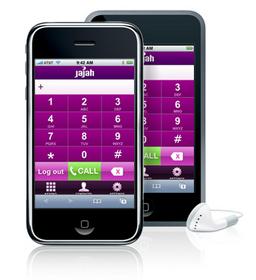
jajah_web_app_iphone_ipod_touch.jpgJAJAH announces a complete revamp of the iPod touch, turning the device into a fully functioning mobile phone for consumers. The new capability, available as a white label solution, enables carriers as well as non-carriers to launch the service under their own brand and provide their customers with the ability to make low-cost phone calls and send SMS text messages to any phone in the world from their iPod touch. To use the service, end users only require an iPod touch and a Wi-Fi connection, with no need for a SIM card or contract.

Move over, iPhone

The iPod touch is one of the most popular consumer devices in the world for music, entertainment, Web-browsing and now, making phone calls.

"Millions of people around the world already have an iPod touch in their pocket. With JAJAH's solution, any company can turn their customers' iPod touch into a fully functioning mobile phone," said Trevor Healy, CEO, JAJAH. "The device is particularly popular amongst students, who live in a world where Wi-Fi access is always available and, like everyone, they are looking to save costs, so this is a perfect solution."

JAJAH's next generation IP communications platform gives its partners everything they need to launch the service immediately. This includes the application itself, plus the entire suite of management services, from termination of the calls and quality control, right through to billing and processing payments in 200 countries around the world.

Given the economic downturn, consumers are seeking ways to make calls on any mobile device they own, as inexpensively as possible. "Offering a turnkey solution provides iPod touch users with added value," said Jon Arnold, principal analyst of J Arnold & Associates. "This is a prime example of how JAJAH's innovative platform helps carriers differentiate their services."

Connection made easy ...

Anyone with the latest version of the iPod touch will be able to download the service from the Apple App Store. With a microphone headset (available from Apple), users will immediately be able to make calls and send SMS messages from their device from any Wi-Fi network in the world. Calling costs will be up to 98 percent cheaper than existing rates on mobile networks, and in many cases could be free.

A platform for everyone (else)

JAJAH's plug-and-play IP platform is the only service that provides the full suite of services required to develop, deploy and monetize IP communication services anywhere in the world. The JAJAH platform is used by a number of the world's largest companies including Intel, Yahoo! and Comcast, and allows any company to offer value-added-services (VAS) to their customer base with no upfront payment or development work, saving millions for its customers and ensuring partners are prepared for the next generation of service provision.

JAJAH continues to develop innovative communications services. In the coming months the company will announce a range of new data communication services, applications and partnerships.


View article...

Buzz Technologies: Mobile VoIP for iPhone and Smartphone

12buzzlogo.jpgAccording to Apple, "If an Application requires or will have access to the carrier network, then additionally such Application: ... May not have VoIP functionality." thus paving the way for Buzz Technologies mobile VoIP service to be used on all iPhones around the World. www.12buzz.com has developed a line of Callback services which provides customers with three unique ways for making inexpensive calls around the world. No new equipment is needed; you use your existing telephone or mobile phone. It is as easy as using the web, sending an SMS message from your mobile phone or dialing a local access number to initiate a Callback call.

Buzz VoIP On the Move on Web

This Callback method allows you to use a web application to initiate a Callback call. By simply accessing Buzz web application, two phone numbers can be connected at a predetermined time. By simply accessing any internet launch point at www.12buzz.com/voip or end users panels to launch a call, the two phone numbers can be connected. You determine the two phone numbers you want to connect and specify the time for the call. Buzz will connect the two phone numbers at the predetermined time.

iPhone VoIP On the Move

Similar to web callback, WAP callback can be initiated from any web enabled mobile phone. Simply go to any WAP enable web page from your mobile devices and initiate a web callback call at www.mobi.12buzz.com.

You determine the two phone numbers you want to connect and specify the time for the call. Buzz will connect the two phone numbers at the predetermined time.

iPhone SMS On the Move

Using only a mobile phone, this method allows you to call worldwide by simply sending an SMS or text message. You send a SMS message identifying the phone number you want to call. Buzz SMS On the Move calls back your customer and connects the call to the customer specified phone number.

iPhone ANI On the Move

Buzz's ANI On the Move method allows you to use a local access number to initiate the call. You must first register your phone number using the Buzz VoIP control panel or by using one of our many publicly accessed VIN or DID. The Callback call is initiated by dialing a local access number from any registered phone. You receive a call back from Buzz and the call is connected to any phone number you specify.

The limitations on iPhone VoIP over cellular is probably a requirement from AT&T and is part of their contract. Buzz VoIP can be used on any phone, anywhere, anytime


View article...

Fonality Phone Systems Offer One-Click Setup With XO's SIP Solution

fonalitylogosmall.jpgXO Communications and Fonality announce that Fonality PBXtra and trixbox Pro phone systems have passed XO Communications' certification for standard interoperability with XO's SIP-based integrated voice and data communications solution.

XO Communications is a leading provider of business-class VoIP services and solutions, supporting more than 15,000 businesses and 500,000 customer employees. Fonality's IP-PBX phone systems are known for reliability, superior features, simplified deployment, and offering cost savings up to 80 percent off the price of competing solutions.

The interoperability of XO SIP with Fonality PBXtra and trixbox Pro phone systems assures businesses that deploying a Fonality IP-PBX with XO SIP is a simple task. The certification process created by XO Communications tested Fonality's IP-PBX in more than 400 real-world environment simulations to ensure maximum reliability.


View article...

IM+ for Skype Available in iPhone App Store

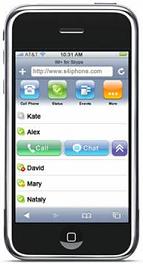
SHAPE Services released its cross-platform application IM+ for Skype in the App Store on iPhone. IM+ for Skype enables text chat and cost-effective calls to Skype contacts and to any phone numbers. Reliable callback technology is used for calls thus providing best phone call quality with no extra delays and latency typical for VoIP.

IM+ for Skype is available in App Store on iPhone under the Social Networking category.

IM+ for Skype is fully compatible with Skype calling plans such as Skype Unlimited or Skype Pro thus making possible significant savings on mobile communication including long distance calls.

Currently IM+ for Skype is also available for RIM BlackBerry, Windows Mobile, Symbian, J2ME, Palm and Android smartphones.


View article...

Skype 4.0 for Windows Released

Skype announces the launch of Skype 4.0 for Windows, the most distinctive new release in the company's five-year history. Thanks to the feedback of tens of thousands of people, the new version offers full-screen video calling, crystal clear call quality and is easier to use than ever before. In addition, Skype users will find all of the features they have come to expect - free voice and video calls to other Skype users, instant messaging, SMS, as well as calls to landlines and mobile devices around the world at very low rates.

Face-to-Face Video Calling
"Video calling has emerged as a very popular way for people to communicate online," said Mike Bartlett, director of product strategy for Skype. "Whether it's saying hello to your daughter at college or reading a book to your child while you're away on business--video calling lets you have the conversations that make a difference and it really feels almost as good as being there."

With the all-new Skype, people can experience the benefits of free face-to-face video calling. It's now easier to start a video call and experience full-screen video, which makes conversations more intimate and engaging.

Additionally, a new built-in bandwidth manager ensures that consumers have the very best Skype video calling experience possible even on a low-bandwidth connection. If you have a fast enough connection (recommended 400 Kb/s or higher), a dual-core processor PC and a Skype Certified High Quality Video webcam, Skype delivers up to 30-frames-per-second High Quality Video.

Improved Call Quality
Call quality is substantially improved in the new version of Skype. The new audio codec achieves wideband audio quality using 50% less bandwidth than previously required. Moreover, it introduces super wideband audio that delivers crystal clear, richer and warmer sound to those using a compatible headset and a high quality broadband connection. The bandwidth manager interacts with the codec to adjust quickly to fluctuating bandwidth conditions to produce the most reliable sound.

Easier Than Ever
Skype now makes it easier to set up your headset, microphone and webcam, so getting started is fast and simple to do in a few steps. The new Conversations Tab makes it easy to keep track of multiple conversations in one place, and you can switch seamlessly to your preferred communication method - free voice and video calls to other Skype users, instant messaging, SMS, as well as calls to landlines and mobile devices at Skype's low rates. In addition, you can choose to use Skype in two different views. Default View has everything neatly contained in a single window or Compact View allows you to resize or put each conversation into separate windows.


View article...

VoIP Distributor NETXUSA Adds TalkSwitch IP-PBX Phone Systems

talkswitch_logo.gifTalkSwitch announces the appointment of NETXUSA as an official distributor of TalkSwitch IP-PBX phone systems. NETXUSA specializes in the sales, service and support of VoIP products, is a trusted source of more than 5000 independent resellers and has provided over 30 years service to the communications industry.

With NETXUSA's distribution and sales centers located in the United States, TalkSwitch resellers benefit from east-coast and west-coast facilities that provide rapid regional response, economical product delivery and support.

"We're very pleased to partner with NETXUSA, providing TalkSwitch resellers the opportunity to work with a recognized leader in the sale and distribution of VoIP products and services," said Jan Scheeren, president and CEO, TalkSwitch. "Their national coverage, expertise and high-touch provisioning capabilities for single and multi-site deployments are big benefits for many partners, and in turn the end customer."

TalkSwitch resellers will enjoy working with NETXUSA's certified engineers and experienced customer service staff. They're always available to support dealers in the pre-sale and post-sale phases. The NETXUSA team delivers the right products and great service, whether a reseller is upgrading an existing legacy system or planning a new VoIP PBX deployment.

"By selecting only proven VoIP products and manufacturers, we can be confident that customer solutions and deployments will be successful," said Eric Todd, CTO, NETXUSA. "TalkSwitch products are feature-rich, deliver outstanding value, and their vendor relationships and channel programs are very strong. They're also a certified Polycom partner, which provides even more choice when creating custom VoIP solutions."

Visit NETXUSA, at the Internet Telephony Conference and Expo, February 2nd - 4th, 2009, Miami Convention Centre, Booth 303.


View article...

Voxbone Chosen to Power Jott's Voicemail-to-Text Conversion Service

voxbone-logo.jpgVoxbone has been chosen by to enable Jott's new voicemail-to-text conversion service, Jott Voicemail. The service saves customers time by allowing them to read (or skip) messages as e-mails or SMS messages, rather than having to listen to them, one by one. Jott Voicemail is compatible with all major U.S. mobile operators and a growing number of smaller operators.

Jott Voicemail works by making it possible for cell-phone users to forward unanswered calls to Jott (Voxbone) DID numbers, instead of defaulting to carrier voicemail. Voxbone routes the call over its managed IP network to Jott's application servers. Jott's voice-to-text technology takes over, first recording a message and then turning the recorded voice into text, which is then delivered as an SMS or e-mail. Jott also makes the audio file available online and via a call-in number like traditional voicemail.

Jott's preexisting services are outbound variations on its core voice-to-text capability, allowing customers to dictate e-mails, reminders, brainstorms, Google and Outlook calendar appointments, tasks, Twitter and Facebook status updates, and other types of messages over the phone. Customers receive the messages as e-mails, text messages, or see them online in the place of typically keyboard-entered items.

While as an outbound service, Jott can be reached by all customers with a single published phone number, the inbound voicemail depends upon assigning separate DIDs to each user. For this quantity of numbers, Jott chose to work directly with Voxbone.


View article...

ICC Worldwide Expands European VoIP Call Handling Capabilities

ICC Worldwide has implemented a major upgrade to its VoIP call traffic handling capabilities. The firm now has three European VoIP Point Of Presence sites located in Milan, Amsterdam, and London. At the Milan site, ICC has recently installed its own DIGITALK Intelligent Switch and Data Server. This action dramatically expands the firm's call handling capacity and overall network reliability. The centrally managed system also enables highly effective network utilization, ensuring the preferential use of capacity to route traffic in a way that is most cost effective for international calling destinations. This allows ICC to efficiently pass savings on to customers, thus ensuring the firm is able to provide the best possible value to its VoIP services subscribers.

Rich Lauer, ICC's President & CEO explained, "ICC has made a substantial investment in our call processing infrastructure. These recent upgrades dramatically expand the amount of call traffic our network can handle. At the same time, system reliability and uptime is measurably improved. The installation of our own switch in Milan also gives ICC complete control over management of our network and the technical operation of our business. We are no longer dependent on contractors or third parties to provide these services."

Lauer went on to say, "In the coming weeks we expect to announce a number of significant developments to our existing business. As such, the recent upgrades to capacity and system reliability will soon prove critical to ICC's ability to continue expanding and competently respond to these evolving business opportunities."


View article...

Preparing for Next Generation 911

The Next Generation 911 vision is being developed in response to the E911 needs of emerging technologies. It is vital that all participants in the 911 community, from telecommunications service providers to public safety answering points, understand the intent of Next Generation 911 and prepare themselves for the inevitable. As several organizations, including the FCC and the National Emergency Number Association, iron out the details, a clear picture has emerged of the overall intent and high-level design of Next Generation 911, as defined here. Understanding the direction and implementing its necessary steps will give service providers, PSAPs, and enterprises a leading edge.

Why Next Generation 911?

First, it's important to define enhanced 911 (E911). E911 is the ability to correctly route an emergency call to the appropriate public safety answering point (PSAP) and to provide the location information associated with the telephone number calling 911.


In general, the public takes this ability for granted and assumes that when 911 is dialed, whether from a wireline, VoIP, or wireless phone, the location information is transmitted to the correct PSAP. However, due to an aging 911 infrastructure designed in the 1970s for wireline, E911 coverage is inadequate for many of today's commonly used communication technologies.

As a result, incumbent 911 providers are scrambling to come up with solutions on the fly, resulting in several non-integrated, non-standard networks for VoIP and wireless, and still no solution for other existing technologies like text, video, and telematics (like Onstar).

According to the November 21, 2008 CRS Report for Congress - Emergency Communications: The Future of 911, "Today's 911 system is built on an infrastructure of analog technology that does not support many of the features that most Americans expect are part of an emergency response. Efforts to splice newer, digital technologies onto this aging infrastructure have created points of failure where a call can be dropped or misdirected, sometimes with tragic consequences."

The safety repercussions created by the limited infrastructure has forced the 911 community to take a look at how to transition 911 systems to accommodate the expectations of the general public as well as the emerging technologies of today and the future. The result is Next Generation 911.

The Objectives of Next Generation 911

NG 911 is designed to meet the following objectives: enable E911 calls from any communications device; enable a flexible, open, non-proprietary and secure architecture; coordinate standards and interoperability in the US and internationally; maximize operating and maintenance cost savings; reduce capital expenditures; provide additional information to PSAPs such as location floor plans, medical records, or emergency contact information; enable geographic independent call access, transfer, and back-up between PSAPs and other emergency organizations; make routing decisions at the time of the call based on most up-to-date location information; and meet NENA i2 and i3 standards (i2 – an interim solution leveraging existing 911 infrastructure, i3 – a long-term solution based on full IP network connectivity).

These objectives combine to ensure the ultimate goal of NG 911: To improve the effectiveness of the nation's emergency communications system and enhance public safety.

The Design of Next Generation 911

Legacy 911 systems use static circuit-switched routing and fixed physical trunks to transmit calls. Call routing is based on manually administered translation tables that employ a fixed one-to-one caller location to PSAP relationship. Limited in the types of communications technologies they can support, individual networks are inflexible, geographically dependant, and difficult to integrate with other 911 systems.

In contrast, Next Generation design uses IP technology to achieve the objectives of flexibility, geographic independence, and interoperability. Routing decisions are made dynamically at the time of the call based on automatically updated location information. Supporting all current and emerging technologies, NG design facilitates the easy transfer and back-up of calls between PSAPs.

Actionable Steps toward Next Generation 911

Service providers, PSAPs, and enterprises can rest easier knowing they are ready for the inevitable. The first step is understanding NG 911. The next step is selecting a 911 provider that delivers it. VIXXI Solutions, a nationwide 911 provider headquartered in Greenwood Village, CO, was founded in response to the E911 needs of emerging technologies per Next Generation objectives.

"Our network was purpose-built to the Next Generation vision. Not many people are aware that the Next Generation technology of 'tomorrow' is actually available today," says Christopher Camut, President and CEO of VIXXI.

Camut advises that it's important to challenge your potential provider with detailed questions that determine their viability for supporting the NG objectives. "Make sure your provider is going to prepare you for Next Generation so you are not stuck at the last minute doing a costly forklift upgrade to your infrastructure."

Here is a comprehensive list of questions to ask your potential 911 services provider to ensure they are truly Next Generation-ready:

  • Can you route E911 calls from any device on a single network?
  • Can you deliver location information from any device?
  • What communication types are you able to support (i.e. text, video, telematics)?
  • Can you make dynamic routing decisions at the time of the call, based on the most up-to-date, automated PSAP boundary and caller location information updates?
  • Can you provide E911 to any PSAP, if the PSAP is E911 capable?
  • How does your network help me reduce my capital expenditures and direct and indirect costs?
  • Is your network 100% IP-based?
  • Can you provide additional information with a 911 call (i.e. medical records, emergency contact information, etc)?

Additional questions to ensure satisfaction with your 911 provider include:

  • Can you customize your solution to meet my needs (unbundled components of 911 versus the end-to-end solution)?
  • How easy is your solution to implement? How long will it take?
  • How quickly can you verify subscriber location information upon turn-up?
  • What are your coverage and connectivity options?
  • Describe your customer care support process.

By taking proactive steps to become familiar with Next Generation 911 and using that intelligence to select a competent Next Generation 911 provider, service providers, PSAPs, and enterprises can have the cost-saving benefits of NG 911, the peace of mind associated with being prepared, and the easy conscience of knowing that they are active participants in promoting the safety of the general public.


View article...

Jon Arnold interviews me about voice and web services, cloud computing and more


jonarnold-danyork-itexpo2008-1.jpgIs the role of "voice" diminished or enhanced by the availability of web services? How does voice fit into the "cloud"? Where do service providers fit into the picture?

Out at ITEXPO last month in Los Angeles, industry analyst Jon Arnold asked me (Dan York) to participate in a series of video interviews he was recording for his IPConvergence.TV site. In the interview, which is now available for viewing, we talked about "voice-enabling" business processes, web services, "cloud computing", the challenges to service providers and customers and much, much more. Jon also asked me to talk a bit about what I see ahead of us in the next few years. It was a fun interview to do and I appreciated the opportunity.

NOTE: There is no way to currently embed the video, so you'll need to watch it over on TMC's site. I'll also note that on my Mac I couldn't watch the video in Firefox but instead had to use Safari. Now this may be due to some local configuration issue on my system, but I thought I'd mention it.


View article...

Want to join an emerging communications/tech dinner in San Francisco Wednesday night?

ecomm2009promo.jpgIf you are in the San Francisco area (perhaps for VoiceCon?) and are interested in "emerging communications" or "emerging technology", would you like to join a group of similar folks at a dinner Wednesday night (Nov 12, 2008)?

Lee Dryburgh, the organizer of the eComm Emerging Communications conference, is hosting a private dinner in conjunction with Thomas Howe at the San Francisco Airport Marriott (Burlingame). There are currently some 50+ folks attending and some seats left and if you are tracking or pushing things forwards in the communications space you may like to try and reserve a seat (75.00 USD) by emailing Lee.

I'll be there, naturally, along with Thomas Howe, Eric Burger, Ken Camp, Sheryl Breuker and many others who are involved in the space. If you do want to join us, please email Lee very soon.


View article...

Skype brings in new CxO management team...

skype_logo.pngAs long-time readers know, I have written a good bit about Skype on this blog in part because while I started out perhaps 4 years ago as a bit of a skeptic, I've become quite a fan of Skype's over the years... they also were one of the more interesting and definitely disruptive companies in the communications/telecom space. In the past year or two, though, they haven't quite had the same buzz as they once did, even while they have continued to grow.

This may perhaps be changing... and as per usual the Skype Journal has the best writeup with Jim Courtney's piece on Skype's restructuring and hiring of a CTO and Chief Strategy Officer as well as a head of HR. I look forward to seeing what this new team will do to help Skype's direction. I agree with Jim, too, that one other major appointment would be good:

There's still one more major executive move I am expecting - a Chief Marketing Officer who bring the badly needed messaging and market communications strategies and disciplines required for a business that's expected to attract sufficient usage to generate those multi-billion dollar sales.

Skype's messaging and communication has seemed disjointed over the past while... it would be good to see that addressed as well. Welcome to all the new folks joining Skype and I look forward to seeing what they'll do!


View article...

Can the new VON recapture the energy/enthusiasm of the old VON?


As has been widely reported within the VoIP corner of the blogosphere, the VON brand has now been reborn under the new ownership of Virgo Publishing. After the demise of Pulvermedia and the VON tradeshow in the spring of 2008, many of us wondered if new owners would be found to bring back the show - or was its demise just a sign of the times and the fact that the conference / tradeshow space related to VoIP is already quite crowded. We watched both Jeff Pulver and Carl Ford move on with their lives and new endeavors... and it seemed that maybe VON would just be consigned to the annals of IT trade show history. Or would it?

The answer came earlier this month when Virgo announced the launch of www.von.com as a portal for VoIP news and also announced a new VON Conference and Expo for September 2009 in Miami.

The rebirth is intriguing on a couple of levels. First, with Pulvermedia, "VON" was the conference/tradeshow and magazine brand, but the web portal was Pulvermedia.com. Now, it's all "von.com". The portal, newsletters, tradeshow and everything else. The tag line is also no longer "Voice On the Net" (or later "Voice/Video On the Net") but rather "The Voice of Network Convergence". As Jon Arnold notes, Virgo has ditched Jeff's distinctive purple color theme for a more traditional blue. And the show is also co-located with Virgo's "Channel Partners" show.

It will be interesting to see how the show goes. As several people have written about, there was a certain "magic" around the VON shows, especially in the earlier days. As Carl Ford wrote about the original VON:

Jeff (Pulver) was on the cool apps side, while I brought in the people who wanted to make efficient networks to support them. That to me was VON, but to our audience VON was a lot of things. It was Cool Apps, New Opps, brillant minds and the switch to cheap voice, etc.

I think the challenge the old VON had was that its audience did become extremely fragmented in recent years. Was the show about voice? and cheap voice? was it about carriers? enterprise? was it about video? Or was it about social networking? I think VON tried to be all of those things and in the end that dilution of focus may have helped in its demise. Will the new VON try to focus a bit more? Or will it try to be more?

In this tough economic climate and in a space already filled with shows, I commend anyone who takes up the challenge of mounting a conference / trade show event. The "new" VON is now nine months out... and it will be interesting to see what it evolves into. Right now there's not enough info up on the website to really understand what it will be... but we should see soon...

P.S. Note that the VON Call for Speakers is open until January 30th


View article...

Skype 2.8 Beta for Mac OS X provides screen sharing, WiFi access, chat features and Twitter-like mood messages


UPDATE: Skype 2.8 Beta for Mac OS X is now available for download.

UPDATE #2: The 2.8 Beta also includes some experimental support for linking Skype mood messages to Twitter.


skype_logo.pngTonight out at the "ShowStoppers" event at MacWorld in San Francisco, Skype announced the new 2.8 Beta for Mac OS X. The new version will apparently be available for download tomorrow, January 6, 2009, from Skype's website. [NOTE: I will update this post with the download link when it becomes available.]

Continuing Skype's rather fragmented product strategy, they have rolled out some new features in this 2.8 beta release that will at least stop us Mac users from whining about Windows users always getting the good stuff first. Here's the quick list of what Skype notes is in this release:

  • Skype Access
  • Screen Sharing
  • Improved chat management: ability to sort chats in the drawer and set priorities to chats
  • Quick Add: much easier to add people to chats
  • Mood message chat: mood message updates from your friends as chat messages
  • Large avatars: 256x256 pixels
  • Hidden avatars in incoming contact requests
  • Ability to add your own notes to contacts

Courtesy of Skype's PR team, I've had a chance to play with the 2.8 beta for a couple of weeks and have these thoughts below...

SKYPE ACCESS

Probably the largest "new" feature is "Skype Access", a service that lets you go to any of the 100,000 Boingo WiFi hotspots and - using Skype - connect to the Boingo hotspot. When you connect, you pay on a per-minute basis and the fee (roughly 20 cents per minute) is deducted from your Skype Credit. You do not have to pay the Boingo monthly fee. You do not have to pay any hourly or daily fees.

Judging from the news release and pre-release info, Skype is immensely proud of this feature but I will be honest and say it does little for me. I just don't use WiFi hotspots as much while traveling (especially now that I'm paying for a wireless broadband adapter). However, I can see how this could be of value. If all you wanted to do was crack open your Mac and send some email, this gives you a great way to do that on a per-minute basis. If I were a heavy user of WiFi hotspots, I'd want to do the math to figure out if it would just be cheaper to buy a monthly Boingo access.

Regardless, it's an interesting move for Skype to get into the business of connecting you to Internet access.

SCREEN SHARING

The coolest feature of the 2.8 beta is a "screensharing" feature where you can share either your entire screen or just a portion of your screen with the Skype user on the other end. Now, this works with all other versions of Skype because it replaces your video stream with the screen sharing. So a Mac Skype user can share their screen with Windows and Linux users.... which is pretty cool.

It's hard to show in a blog post, but if you watch my screencast about the 2.8 beta, you can see it in action:

You can share either your entire desktop or just a section of your screen. You can also resize the section you are sharing while you are in the middle of sharing. When you stop sharing, you just flip back to showing your video.

CHAT PRIORITIZATION

By far the most useful feature I've found in the 2.8 beta is the ability to set the "priority" of a chat session - and then sort your chat sessions by priority in the Mac's "drawer" way of displaying chat sessions. I can just control-click a chat (either a private or public chat) and then go down to the "Set Priority" menu choice:

skype28mac-setpriority.jpg

You can then sort the chats based on their priority using the drop-down menu at the top of the "drawer":

skype28beta-sortbypriority.jpg

You can also sort based on title or date. Personally I've found the Sort by Priority to be very useful when you have, as I do, a zillion chats open at any one time. (And yes, I report to RJ, our CTO, so his chat gets the highest priority! ;-) )

MOOD MESSAGE CHAT - AND FOLLOWING (like Twitter)

Perhaps the most intriguing aspect of the 2.8 beta is the new "Mood Messages" pseudo-chat that you can enable in the Advanced part of the Skype Preferences:

skypemac28beta-advancedprefs.jpg

Once you enable the "Mood Message Chat", you get a new chat window that opens up that shows you the mood messages of all of your contacts:

skypemac28beta-moodmessages.jpg

It also very nicely lets you set your mood message simply by typing in the window as you would to any other chat window. This is quite nice for someone like me who almost never changes my mood message in the regular window.

This actually makes Skype mood messages useful to me.

However, because of that other option that says "Show iTunes song in my mood message", you rapidly wind up seeing that a whole lot of people have that option checked and your Mood Message Chat rapidly fills with updates of music people listen to. What if you don't want to see their updates? Well, Skype has made it so that you can "follow" updates from your contacts through a simple menu choice:

skypemac28beta-followmoodmessage.jpg

The down side here is that if you enable the Mood Message Chat, you are following all your contacts by default and have to go through and "unfollow" (i.e. uncheck the menu choice) people you don't want to follow. It would be great if Skype had a "follow by default" or a "stop following all contacts" choice... something along those lines to let you control who you are following.

The intriguing aspect here is that this enables you to turn Skype mood messages into the kind of status updates that you typically have in Twitter, Facebook, or any of the other zillion services offering status updates. The great thing here is that it is simply another Skype chat window like all your other chats. (Of course, you can get a Skype chat for Twitter using "twitter4skype", but this is now with Skype mood messages.)

I think, though, for it to reach any kind of real usage, you need more people to enable this feature (it is off by default) and actually start using it - and for that it also needs to be on more platforms.

[As a tease, I'll mention that there is a way to integrate this mood message chat with Twitter, so anything I type there also shows up in my Twitter stream... but I'll write about that in a separate blog post as it's not directly tied to the 2.8 beta release. Soon...]

QUICK ADD

Another nice feature is the ability to quickly add someone to a chat through a button at the top of the chat window. You click on the window and start typing in a contact's name:

skype28-quickaddtochat.jpg

Before you could always drag-and-drop a contact from your main Skype window into a chat, but now you can use this quick add button. It is particularly useful if you have a large number of Skype contacts.

NOTES ON CONTACTS

Another useful feature is the ability to add private notes to each of your Contacts. So you could store information about how you know the person... their interests... basically anything you want as it is a free-form text field:

skypemac28beta-notes.jpg

What's not yet clear to me is where these notes are stored. Are they accessible through multiple Skype clients if you were logged in on multiple machines? Or are they tied to the machine where you create the Notes? I'm guessing that they are stored with the local client like chat histories are.... but I'd need to have multiple installations of the 2.8 beta to really know this.

OTHER FEATURES

Skype also added a few other features:

  • New set of icons
  • Large avatars: You can now have images up to 256x256 pixels in size.
  • Hidden avatars in incoming contact requests - so you aren't exposed to images that might be offensive.

There are undoubtedly other features that we'll find as we work with it more.

CONCLUSION

So with this 2.8 Beta for Mac OS X, Skype provides some interesting new capabilities. I can see the screen sharing being quite useful to show people what's on my screen. The chat prioritization is great for heavy chat users like me. The possibilities of actually making the Mood Messages useful intrigue me. Frequent WiFi hotspot users may find the Skype Access feature useful and economical.

All in all, it's a great evolution of the Skype client for Mac OS X.

I do wish, though, as I've discussed before, that Skype's product strategy weren't so fragmented. Sure, as a Mac user, it's fun for a few minutes to have some features that Windows users don't have... but that fun rapidly fades when I can share my desktop with a Windows user but they can't share their's. And they almost never use the Mood Messages because it's not convenient to do so.

Perhaps most annoyingly, I am currently in a position where I am helping some Windows users get started with Skype and so I'm trying to help them with their Skype client... when mine is markedly different. It's a frustrating experience. I do hope Skype's new management can help converge the product streams so that the user experience (and technical support experience) is closer between platforms (while, yes, acknowledging that platforms have UI/behavior differences). We'll see.

In the meantime, I'm going to enjoy using this new beta on my Mac and seeing what else might be inside the release.

Again, Skype indicates that the 2.8 beta will be available tomorrow, January 6, 2009, for download for Mac OS X users.

I'll look forward to reading what you all think...


View article...

Skype 2.8 Beta now available for download for Mac OS X...

skype_logo.pngSkype has now announced that the 2.8 Beta for Mac OS X is available for download. As I wrote about yesterday and demonstrated in a video, the new version lets you do screen sharing, access Boingo hotspots, manage chats and more...

Skype's news release is also out as well as a longer Skype blog post explaining the features (and which talks more about Skype Access, something I was unable to really try or demo).

It also looks to be worth reading through the full release notes for this version as there is a LONG list of improvements, changes and bug fixes.

But you don't have to take my word for it anymore, you can download the 2.8 Beta for Mac OS X now.


View article...

Skype launches on Android - "Skype-lite" on over 100 handsets

skype_logo.pngNews out of CES in Las Vegas is that Skype is launching on the Android Platform:

Skype today announced the release of a lite version of Skype™, a 'thin' client for Skype that can be downloaded on Android-powered devices, as well as more than 100 other Java-enabled mobile phones.

With more details here about the models and where to get it:

It also works on more than 100 of the most popular Java-enabled phones from the world's top five handset manufacturers – LG, Motorola, Nokia, Samsung and Sony Ericsson. For instructions on downloading the lite version of Skype to LG, Motorola, Nokia, Samsung and Sony Ericsson phones, users can visit www.skype.com/m using the mobile browser on their phone or www.skype.com/go/mobiledownload from a computer. The web page includes a directory of the mobile phones currently supported.

The news release has more details about costs, etc.

Definitely a great move on Skype's part.... now they just need that iPhone client! ;-)

P.S. And yes, I know (and applaud) that TruPhone came out with an iPhone client that includes Skype support... but it's still not the full range of Skype functionality that I'd like to see.


View article...

eComm Podcast: Matt Ranney on Thinking Beyond VoIP and A. Bell Telephony

ecomm2009promo.jpgOver on the eComm blog, Lee Dryburgh put up an interesting podcast on "Matt Ranney on Thinking Beyond VoIP and A. Bell Telephony". It's well worth a listen for those of you interested in the larger picture of what we are building for a communications infrastructure...

P.S. And if you are interested in that topic, you really should consider attending eComm March 3-5...


View article...

Define "VoIP" - and then we can debate whether it is dead!

There is a fundamental problem with the "VoIP is dead" debate continuing to rage across the VoIP/communications part of the blogosphere (see Alec Saunders part 1 and part 2, Jon Arnold, Andy Abramson, Ken Camp, Jeff Pulver part 1 and part 2, Om Malik, Shidan Gouran, Ted Wallingford, Dameon Welch-Abernathy (PhoneBoy), Rich Tehrani and a zillion others...)

Aswath Rao and Luca Filigheddu came closest to the mark in their posts. The fundamental problem with this entire debate is simply this:

Define "VoIP"?

As I discussed in an Emerging Tech Talk video podcast I put up this morning, there are a range of definitions you could give to "VoIP", including, but not limited to, the following:

  1. The underlying infrastructure, a.k.a. the "plumbing" - the mechanisms, protocols, etc. that are used for the transport of voice/video/etc. over IP. Things like SIP, H.323, RTP, various codecs, etc.
  2. Consumer "PSTN line replacement" services - Offerings like those of Vonage and so many others where the basic idea is that you can get cheaper telephone charges by going over the Internet and getting rid of your local landline. Also called "pure play" VoIP by some or "VoIP arbitrage" by others.
  3. Computer-to-computer/softphone offerings, often coming from the IM space - Skype sets the bar here, but there's a host of other players as well, including Gizmo, GoogleTalk, FWD, and many others. Some of these came from existing Instant Messaging services that simply added voice.
  4. Enterprise IP-PBX/"Unified Communications" solutions - Communications systems used by enterprises, large and small - what has traditionally been called the "PBX" but that term is increasingly meaningless given the range of options now being provided.
  5. The *entire* vision of rich communication over IP - The whole picture... everything over IP... voice, video, IM, presence, file/data sharing... the whole rich communication experience.

Each and every one of these is referred to as "VoIP" by some segment of our industry. (And there's even more... I did have someone once reply to me that "VoIP" was the pre-paid calling cards that you can buy in convenience stores, etc. (And in truth, they usually do get their cheap rates by using VoIP for transport somewhere in there.))

The point is that we need to be a bit more precise in what we call "VoIP" before we can argue about whether it is alive or not.

From my point-of-view, the life and death of these different definitions of "VoIP" varies:

  1. The underlying infrastructure - Doing extremely well... in fact, so well, that it's fading into the background and just being part of our underlying network infrastructure, both in the fixed and mobile environments. (Which also argues that some of the VoIP-infrastructure-specific products/services are no longer quite as necessary.)
  2. Consumer "PSTN line replacement" services - Great for cable companies; not so good for pure-plays - Looked at Vonage's stock price lately? They and so many of the other companies whose only real selling point was "get cheaper phone calls with us" are certainly struggling or dying. Why? The cable companies, for one, are cleaning up in this space with their "triple-play" bundling of voice with Internet access and television. The pure-play companies may be cheaper on voice but the cable packages may be far more compelling. Add in the "unlimited calling" mobile phone plans we have here in North America, plus the softphone players like Skype plus some of the emerging cloud/hosted offerings... and all-in-all it's not a pretty picture for Vonage and friends. (And this is really the VoIP "industry" to which Alec was referring.)
  3. Computer-to-computer/softphone offerings - Very alive - Skype is flirting with 15 million simultaneous online users and also reporting decent income, Gizmo is rolling out a Flash-based softphone to remove the need for a client, TringMe is providing widgets to various folks... and a whole range of others are growing. (While some players are shrinking here, too, of course.)
  4. Enterprise IP-PBX/"Unified Communications" solutions - Very alive - Basically every vendor supplying communications systems to enterprises are now doing so over IP. No one is selling traditional TDM PBXs anymore. Players in this space include the traditional telephony players like Nortel, Avaya, Siemens, Mitel, Alcatel-Lucent, along with newer entrants like the dominant Cisco, ShoreTel, Digium/Asterisk and then even newer entrants like Microsoft OCS and IBM Sametime.
  5. The *entire* vision of rich communication over IP - VERY alive! - In fact, I'd say that the next few years will be one of the most fascinating years in this space. We're at this amazing intersection of insane amounts of local bandwidth and computing power, increasingly ubiquitous powerful mobile devices, and incredible power out "in the cloud". All around us we are building the massive IP communications interconnect. It's happening. At a glacial pace in some areas and at a crazy pace in others. We're layering on applications and services. We're making them available through simple APIs and mashups. We're all collectively doing some pretty amazing things out there. It's a great time to be in this space!

So how do you define VoIP?

If you think of "VoIP" as my #2, the "cheap telephony consumer services", then sure, if you don't consider the cable companies then than sector isn't doing too well. If you define VoIP as one of the other definitions here, well, then in my view it is very much alive.

What do you think? How do you define "VoIP"?

P.S. If you'd like to join a number of us to discuss this topic, Sheryl Breuker and Ken Camp are hosting a conference call tonight at 9pm US Eastern / 6pm US Pacific. Join us... it should be fun. :-)


View article...

Want to learn about building voice apps with VoiceObjects? Join the "Developer Jam Session" webinar tomorrow...

VOdeveloperjamsession.jpgAre you interested in learning more about VoiceObjects (recently acquired by my employer, Voxeo) and how you can use VO to rapidly develop complex voice applications? If so, you can join VoiceObjects VP Stefan Besling tomorrow for a "Developer Jam Session" webinar where we will go through the new features of the recently announced VoiceObjects 7.4:

Date: January 14, 2009
Time: 8am PDT, 11am EDT, 5pm CET
Topic: Introducing VoiceObjects 7.4
Speaker: Stefan Besling, Vice President of Engineering, VoiceObjects Germany GmbH

Abstract: This session will give you an overview of the enhancements and new capabilities provided with VoiceObjects 7.4. Learn about 2-way SMS and Instant Messaging, security and user management enhancements, object extensions, and a lot more. Join us to stay up-to-date with the newest release of the VoiceObjects platform.


View article...

The return of the Squawk Box podcast... today and next Tuesday

squawkbox.jpgAs Alec says, he "missed from the microphone" and so he's brought back the Squawk Box podcast with a show today (also via Facebook) about the new Windows 7 beta and a show next Tuesday (also via Facebook) that will be an interview with Lee Dryburgh, coordinator of the eComm conference.

The Squawk Box calls have been a great amount of fun over the past year or two. We've learned a lot together and shared some great discussions. I enjoyed guest-hosting and wrote here on this site about a number of the calls. I'm glad Alec is bringing them back in at least a limited form.

The conference call today (and most Squawk Box days) is at 11am US Eastern time and is open to anyone who wants to participate. They are made available later as a podcast from Alec's blog at www.saunderslog.com. Being a "Mac"-guy these days, I don't expect to have a whole lot to add to the Windows 7 conversation, but I'll be interested to hear the experiences of those like Alec who are already playing with Windows 7. Next Tuesday, I do expect to be on the call with Lee...


Skype used for voiceover work in an animated film shown at Sundance...

skype_logo.pngHaving now been in the podcasting space for most of four years, I at one point looked into how "voiceover" work was done with traditional studios. To get the highest audio quality, the traditional route has been to use actual ISDN lines here in North America. This seemed to me an area that could be ideal for VoIP to disrupt... and it appears that in at least one case it's done exactly that.

News out of the Sundance Film Festival is this:

PARK CITY, Utah - Philip Seymour Hoffman literally phoned in his voice performance for tonight's opener at the Sundance Film Festival, the animated feature "Mary and Max."

"The cost of flying any big-name actor to Australia would be extreme," explained director Adam Elliot, who is making his feature debut after his Oscar-winning animated short "Harvie Krumpet."

"We didn't have a lot of money, and it's not like we could have flown him in on economy. So we piped him in for two sessions, in New York and London, with high-quality sound that makes him sound like he was in the studio with us in Australia. I was quite surprised at how good the technology is."

And at the end we learn what the technology was:

"It sounds weird, but I've never met him in the flesh," says Elliot. "We could see him on Skype when he was recording his part all by himself. He was so professional."

Pretty cool to see...

P.S. And yes, there are probably many other examples of this out there, but this is the first one that I've personally learned of.


View article...

Heading down to ITEXPO in Miami on Feb 2-4...

ITEXPO-East-logo-1.jpgWill you be down in Miami at ITEXPO February 2-4? If so, please feel free to drop me a note and perhaps we can connect somewhere there.

I'll be arriving Monday afternoon and then on Tuesday, February 3rd, I'll be donning my VOIPSA VoIP Security hat to participate in a SIP Trunking Workshop sponsored by Ingate Systems on "SIP Trunking And Security". These workshops are always fun to do and as they are free to anyone attending ITEXPO (even just with an exhibit pass), they are usually well-attended. I'll be bringing my recording gear, too, and the talk will eventually go out in my Blue Box Podcast feed so you will be able to hear it later.

Speaking of recording... I'll have my video gear, too, and so if you have some new product or service in the "emerging communications" space that you think I might be interested in recording for my "Emerging Tech Talk" video podcast... well... pitch me. :-) I know I'll be recording a number of videos down there and I would certainly consider doing some more.

Wednesday evening I'll be driving back to Orlando and in Voxeo's office on Thursday and Friday so if you're in the Orlando area, please feel free to let me know as well.


View article...

FWD launches "SIP to SIP" directory of apps that work with SIP...

siptosiplogo.jpgIf you have a new SIP service or application, how can you find other services to which you can directly connect via SIP? That's the idea behind the new "SIP to SIP" directory launched by the folks at FWD and now available at www.siptosip.net. From the main page:

Why SIP to SIP VoIP?

SIPtoSIP lists applications and content that require SIP (Session Initiation Protocol) enabled devices on both ends of the connection. Realizing the promise of VoIP requires expanding real-time communication options beyond the functions already available with traditional telephones or cell phones. The ability of SIP based VoIP to support HDVoice, video, and click-to-connect requires SIP devices on both ends of the connection. Send suggestions for corrections and additional listings to Daniel Berninger at dan at danielberninger.com.

The directory is very obviously new and only has a few entries on the various pages:

As is noted, Daniel Berninger is looking for people to email him suggestions.

I do applaud the FWD folks for looking at another way to promote the further building of SIP interconnections and so I wish them well with this directory. I'd note, though, that the VoIP-Info.org wiki does already contain a great amount of this information. For instance, the site has a very lengthy page on VoIP phones. Now, granted, the phones listed there are for "IP" in general and not just SIP. Some use H.323, IAX or other protocols. There is perhaps a role for someone to curate a list like this into just SIP-specific information, but whether that needs to be a separate site or perhaps another page within a wiki like the VoIP-Info.org one is a question to consider.

Regardless, the FWD folks have now made this siptosip.net site available and it will be interesting to see how it evolves.


View article...

EnGenius Technologies releases long range Super G Wifi router with PoE


EnGenius, just introduced their most powerful Wireless Access Point/Client Bridge for the business network environment. The ECB3500 is a high-powered 802.11 Super G long range WiFi device that was designed to offer consistently robust communication over wide areas and long distances, while also being highly adaptable and easy to use.

"Businesses are becoming increasingly dependent on wireless communication. However, employees don't always sit in the same office or even the same building anymore. The ECB3500 was designed to offer the wireless coverage needed to productively reach all employees," remarks Roger Chien, Product Manager.

The ECB3500 provides strong, uninterrupted coverage up to 108 Mbps over a wide area using high 600mW of wireless output power. It operates at the 2.4 GHz frequencies in both the 802.11 b/g (11/ 54 Mbps) or Super G (108 Mbps) wireless standards. And, with the use of QoS (Quality of Service) technology, the ECB3500 optimizes all data transmissions; thereby, maximizing its ability to handle heavy loads of traffic. This includes all forms of wireless video streaming, VoIP (Voice-over IP), and other multimedia business applications.

"We've engineered the ECB3500 to ensure superior long range WiFi coverage to all the leading brands in its class," added Chien.

The key features of the new, powerful ECB3500 are:

  • High 600mW Wireless Power - guarantees a robust signal over long-distances
  • Super G 108 Mbps Support - enables high-transfer speeds for large data transmissions
  • Dual High-Gain Detachable Antennas - optimizes wireless traffic with Antenna Diversity Technology and transmits higher power up to 2000 mW EIRP using a 5dbi antenna
  • Multiple Wireless Names - permits different access levels within one device
  • Multi-Functional Device (7 operation modes) - performs multiple uses for different network topologies
  • Intelligent Quality of Service (QoS) Technology - orders bandwidth priority for high-demand transmissions
  • Power-Over-Ethernet (802.3af) - allows power and data to come over one cable for ease of installation


Almost any enterprise can take advantage of the ECB3500's remarkable power and range because the device is adaptable to most network environments. For example, in AP mode, the ECB3500 can broadcast multiple WiFi networks (SSID); allowing for numerous security levels within one device. In fact, ECB3500 can serve different functions:

1.   Wireless Access Point - network connectivity for multiple wireless clients
2.   Client Bridge - wireless network connectivity for a single wired client
3.   Universal WiFi Repeater - wireless range extender that reaches dead-spots
4.   WiFi Router - wired internet or network connectivity for multiple wireless clients
5.   Client WiFi Router - wireless network connectivity for multiple wired clients
6.   WDS (Wireless Distribution System) - wireless connectivity to expand an established network

In addition, EnGenius solved one of the biggest problems when installing a new wireless networking product: proximity to outlets. The ECB3500 supports 802.3af PoE (Power-over-Ethernet) which allows power and data to be accessed over a single cable. This feature helps to speed up deployment time and reduces network down time.
The EnGenius ECB3500 Super G, Long Range WiFi 802.11g Wireless Access Point/Client Bridge is a high-powered, efficient wireless product that can adapt to any network topology or business environment. It is available at select value added distributors, direct marketers, e-commerce sites and value-added resellers at a retail price of $119.00.

For addition information about the ECB3500 or other EnGenius products, please visit www.engeniustech.com.

Source: PR Web


Nortel Exits Mobile WiMAX Business

Nortel is saying good-bye to its mobile WiMAX business and jumping head-first on the LTE train.  The company is working with Alvarion to transition its joint mobile WiMAX customers to Alvarion. Nortel is not exiting the fixed WiMAX space.

Nortel employs about 500 people to support mobile WiMAX, according to spokesman Ryan Hill, and it's not clear how many of them might end up at Alvarion. The two companies combined efforts last year to integrate Alvarion's radio access technology with Nortel's core network and backhaul solutions.

Their agreement also covered Nortel's resale of the Alvarion platform for WiMAX access points, and Alvarion will not be able to recognize about $2.4 million of revenues in the fourth quarter due to Nortel's exit. That will bring Alvarion's earnings per share down by about 4 cents for the quarter.


Nortel, which is going through Chapter 11 proceedings, sees LTE surfacing as the technology of choice for most operators worldwide, Hill said. Nortel is in trials with Verizon Wireless and T-Mobile International and it won a contract with Hitachi to provide LTE core technology to KDDI in Japan.

As recently as December, a Nortel representative said the company had a lot of vested interest in making the partnership work with Alvarion. At the time, the two companies had close to 50 projects in the works.
 
Source: Wireless Week


View article...

Polycom rolls out QDX 6000 video conferencing system

  Polycom is introducing a videoconferencing package for small businesses that have low-bandwidth WAN connections. The QDX 6000 system includes a codec, two microphones, a 4CIF standard definition camera, remote control and cables. The gear does not support telepresence, the immersive audio/video technology that creates the illusion participants are sitting across the table from each other.

But the system is designed to make the most of low-speed Internet connections and tighter budgets of smaller businesses, Polycom says. Integrated lost-packet recovery technology can maintain conference quality with as much as 10% packet loss, making it suitable for connections over the Internet. With a 256Kbps connection, the system can support 20 frames per second video; at 384Kbps it supports 30 fps video.

The product is compatible with videoconferencing gear made by Lifesize, Tandberg, Sony and Aethra. It supports video standards H.261, H.263 and H.264.  AES Encryption for the audio, video and data streams is supported.


Management of the QDX 6000 is done system by system so deployments should be restricted to a few units that can be handled manually without a management platform.


Source: CIO India


Blogger Templates by OurBlogTemplates.com 2008